


Class Struggle and Revolution in Iran
[Editor's note: this is part 2 of the series Eyes on the Prize. Part 1 can be read by clicking on this link: https://www.blakdwarf.org/post/iran-eyes-on-the-prize ]
Whatever the vicissitudes of the current ceasefire, each passing day of the joint US-Israeli offensive against Iran and Lebanon have made it abundantly clear that both Trump and Netanyahu are determined to blast their way towards a new Middle East – one in which a Greater Israel and Saudi Arabia will be the undisputed guardians of US oil interests.
With China looming large in the background and global warming an ever-receding and distant cloud, control over global energy supplies, both carbon and nuclear, is Washington’s prime consideration.
If that means killing thousands of innocent Iranian, Lebanese and Palestinian civilians, destroying some of the basic means of subsistence and displacing millions of families, then so be it. As the Korean and Vietnamese wars demonstrated, the threat to bomb Iran back into the Stone Age and destroy an entire civilisation, is not an idle warning by a deranged individual. This is imperialism at work, a bully that takes pride in its destructive power and the use of force to reverse its historic decline.
Despite claims that they are only targeting military assets and regime facilities, over 924 schools and 30 universities have been damaged or destroyed. In total, between 22,000 and 40,000 commercial units and between 92,000 and 115,000 homes have been destroyed, leaving over 3.2 million people internally displaced.
Iran’s industrial capacity has also been targeted and seriously degraded, including every major steelworks in Isfahan, Ahvaz, and Mahshahr. Other non-military targets include pharmaceutical plants such as the Pasteur Institute, a research facility for the development of vaccines and biomedical products.
Although the current ceasefire demonstrates that bombs alone are a blunt instrument, there can be little doubt the Washington and Tel Aviv have taken important steps in crippling Iran’s challenge to their regional hegemony. A pathway has been opened towards exacting further concessions from a weakened regime. The aim is not to destroy Iranian capitalism but to tame its ambitions and curtail its power as a regional player.
Whilst the claim that the war has already destroyed Iran’s air force, navy and army is clearly exaggerated, Iran’s military resources, supply lines and supporting infrastructure have all been seriously degraded. With its economy also increasingly starved of the oxygen provided by its oil export revenues, the regime will be forced to make an historic compromise.
This will most likely include restricting its nuclear energy programme even further, liberalising foreign investment opportunities ending its near-total control of the Strait of Hormuz and ceasing its funding of Hezbollah.
Having withdrawn around $30 billion from his war chest so far, Trump will be looking for a return on the Pentagon’s investment. Trump wants a deal, but should the current negotiations fail to yield results, he is already carrying out a strategic rearmament for a further phase in the war.
Either way, a lasting peace in the region arising from these negotiations is a pipedream.
Whatever regime emerges from the end of the war – whenever that may be - will face the same crisis of capitalism that preceded it, only this time magnified tenfold by the devastation of key infrastructure and industrial installations.
The IMF and neoliberalism in Iran
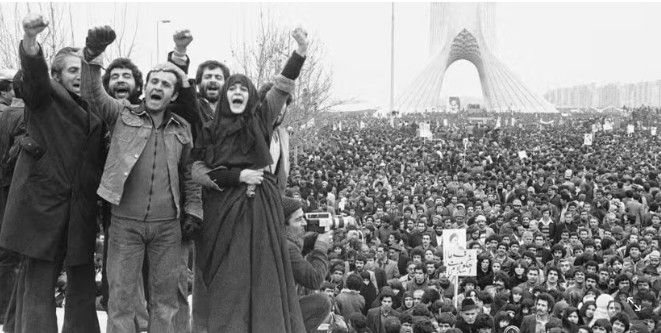
When masses of Iranian youth, urban poor and shopkeepers took to the streets in defiance of the clerical regime during the last wave of protests, they were driven to do so by the worst economic crisis since the 1979 revolution. Both then and now, the Iranian masses have faced a regime dedicated to the same social system in which the needs of workers and farmers are entirely subordinate to those of super-rich capitalists.
Strip away the false prophets of Islamic fundamentalism and what you will see is a government and state committed to the same neoliberal principles as their Western counterparts. The only real difference is that, in the aftermath of the 1979 revolution, the free reign given to capitalist development in Iran required an iron heel to keep the Iranian masses in check.
It is worth recalling the fact that that period was also the era of Thatcherism, a time when, as the 1984-85 miners strike demonstrated, the British state itself was not averse to suppressing “the enemy within”.
It is a little observed fact that the initial wave of privatisations in Iran coincided with Thatcher and Reagan’s free market economic policies. Encouraged by the latter two elections, the International Monetary Fund (IMF) and the World Bank proceeded in a markedly neoliberal direction.
At the heart of this were economic shock therapies that traded loans and advice in return for huge cuts in public sector spending and a process of deregulation that would expose Third World economies to even greater exploitation by multinational coroporations. Known as “structural adjustment” reforms, they imposed an enormous debt burden that demanded even greater austerity.
The rejuvenation of capitalism in Iran was never inhibited by such loans, but by early 2012, the Iran Privatization Organisation calculated that 589 state-owned companies with a share value of $83 billion had already been sold off to create a billionaires’ paradise.
At the core of the recent waves of mass protests in Iran has been the resistance to the latest round of neoliberal measures. Iran has been a member of the IMF since its inception and the revolution did not change that. However, its membership has been governed by US and European sanctions and it was only following the 2015 nuclear deal with the Obama administration that the regime began to engage with the IMF.
With some sanctions now being lifted, the regime turned to the IMF for advice on how to diversify the economy and broaden its industrial base. The IMF duly obliged with a 2017 report that concluded by recommending its standard dose of austerity measures to reduce the economy’s dependence on oil exports. The government of President Rouhani had already embarked on this course with budget proposals to end cash subsidies for millions of poor people, increase fuel prices and privatise public schools.
Before the recommendations could be implemented, the Iranian people were already up in arms at having borne the brunt of Western sanctions.
In 2017, according to the Iranian Chamber of Commerce, 33% of Iranians lived below the poverty line, and the chasm separating rich and poor had widened even further. A BBC Persian investigation found that, on average, Iranians had become 15% poorer over the previous decade, and that their consumption of bread, milk and red meat had decreased by between 30% and 50%.
The official unemployment rate was 12.4%, but in some parts of the country it was more than 60%. Young people, who accounted for more than half of the population, were severely affected.
It was no surprise then that the capitalist regime was shaken by a tsunami-like wave of popular protests covering 80 of Iran’s principal cities. Amongst the most popular chants was, "People are paupers while the mullahs live like gods." This marked a new chapter in contemporary Iranian history, one in which the masses began to take center stage despite facing the most ferocious repression.
Crisis continues
A 2023 World Bank report on Iran covering the period 2011-2020 predicted that some 40 per cent of Iran’s population of 80 million were in imminent danger of falling into poverty. The forecast was fairly accurate: actual poverty levels had already risen from 20 to 28 per cent of the population. and reached 36 per cent of the population by 2023 with further increases expected by 2026. As in other capitalist countries, this coincided with an increase in unequal wealth distribution, with the top 10 per cent of Iran’s population owning nearly 70 per cent of the country’s wealth.
Whilst this widening chasm was most apparent amongst Iran’s teeming urban proletariat, those who toiled in the countryside were also severely affected.
The Iranian peasantry
When the neoliberal reforms began, agriculture’s share of the economy hovered around the 27 per cent mark. This has since declined by almost half and stands today at 14 percent, with a loss of 1.5 million peasants since 2005 alone. Of the remaining farmlands, some 86 per cent is comprised of small holdings. According to official reports, the average size of these holdings is 4.9 hectares (12 acres). This compares with a UK average of 80 hectares (198 acres).
Some 3.5 to 4 million peasants and farm labourers continue to work the land, toiling long hours and frequently working a double shift in other jobs in order to supplement their low income. The capitalist mode of production in Iran is now verging on a disaster for Iranian family farmers and agricultural labourers. This was described as follows by the journalist, Poorang Novak, in the online journal, Iran News Update:
“Iran’s agricultural sector is teetering on the brink of collapse. Beset by soaring input prices, chronic water shortages, land degradation, unregulated brokerage networks, and broken government promises, farmers across the country are abandoning their fields. What was once a cornerstone of national food security is now a battleground of mismanagement, environmental decay, and deepening economic despair.”
Besides denying the peasantry essential supplies and credit, the market system in Iran has fostered the growth of a parasitic layer of middlemen who purchase goods from farmers at rock-bottom prices and sell them on at exorbitant rates. However, as the above article emphasised, the core of the problem is that Iran’s landholding system is dominated by smallholder farmers with limited access to modern tools, economies of scale, or government support.

As the crisis of Iranian capitalism has accelerated, it has hit rural areas especially hard. A 2023 World Bank report on Iran covering the period 2011-2020, made the following observation:
“Almost half of the rural population is poor. Poverty has increased across the board, but the rural–urban divide has widened. Even within rural areas, there are large disparities across sectors. Over half of agricultural laborers were poor in 2020, compared to 36 percent of those self-employed in agriculture and non-agricultural workers. The depth of poverty has also increased, as rural inhabitants have cut back proportionally more of their consumption in response to deteriorating economic conditions.”
Inevitably, this has provoked some resistance, most notably with the peasant revolt in Isfahan in 2021. This was another case where essential water supplies were diverted for industrial and military purposes by the IRGC, leaving the local river bed completely dry.

The rising poverty levels and food shortages in Iran have been accompanied by galloping hyperinflation. The rate of inflation rose to over 40 per cent for the year 2025, meaning that Iranian households had to pay nearly 50% more than in the previous year for the same basket of goods and services.
Whilst the working class in Iran have been the primary victims of this crisis - and of Western sanctions in particular - it is this class which has also been in the vanguard of the Iranian people's struggle for social and national liberation.
The vanguard role of the working class
"The modern bourgeois society that has sprouted from the ruins of feudal
society has not done away with class antagonisms. It has but established
new classes, new conditions of oppression, new forms of struggle in place
of the old ones.
"Our epoch, the epoch of the bourgeoisie, possesses, however, this distinct
feature: it has simplified class antagonisms. Society as a whole is more and
more splitting up into two great hostile camps, into two great classes directly
facing each other — Bourgeoisie and Proletariat. "
(The Communist Manifesto, Marx and Engels)
Prior to the current war, the Western mainstream media chose to focus on the mass street resistance to the regime. The broad-based character of that resistance undoubtedly shows how the social and economic crisis has impacted different strata of the population. At the same time, the populist theme of this coverage is part of a conscious effort to obscure the class issues involved, particularly with regard to the social impact of Western sanctions. [2] Not only has this media coverage concealed the bourgeois class interests represented by the regime, it is part of a narrative in which the vanguard role of the Iranian working class is hidden from history.
The first general strike in Iran took place in Abadan in 1929, proclaiming the arrival of the working class as a new political actor and the potency of a new form of protest, the industrial strike. This potency was further displayed during the strikes of 1946, 1949, and yet again in 1951–53 when oil workers were at the center of the pressure to nationalise the Anglo-Iranian oil company.
The oil industry employed relatively few workers compared to its production of five to six million barrels a day, but their numbers were still considerable. Having dropped to about 40,000 by 1970, the number of employees increased to 67,000 in early 1978, as Iran expanded its oil facilities and production. This number rises to almost 80,000 when we add the roughly 12,000 employees of its distribution organization.
Dual power and revolution
Prior to the Iran-Iraq war, the Iranian working class played a central role in the revolutionary movement. Oil workers have been at the centre of this, beginning in 1946–1953, when they were the heartbeat of a popular movement demanding the nationalisation of Iran’s oil industry.
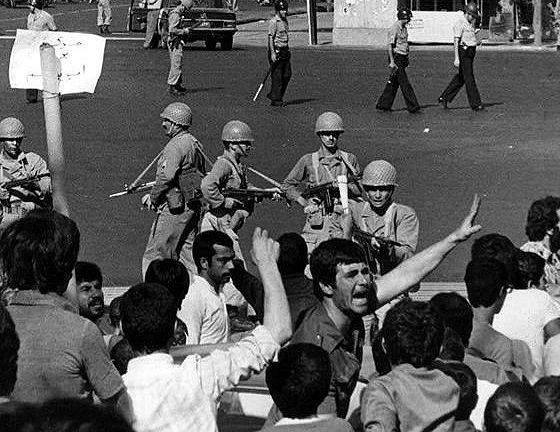
Shortly before the mass uprising which toppled the Shah in 1979, the oil workers engaged in a series of mass strikes over a 4-month period, paralysing oil production and giving powerful impetus to other sections of the working class. The strike committees that organised those struggles provided the basis for the shoras (workers councils) that emerged across different industries following the insurrection. An account of this is given in the publication, The Shoras in the Iranian Revolution: Labour Relations and the State in the Iranian Oil Industry, 1979-1982:
“After the insurrection, the strike committees in the Abadan Refinery invited all the workers to participate in general assemblies in order to elect the representatives of the showras. Higher wages, better and cheaper housing, retirement benefits, participation in management and the purge of senior ancien régime employees were the most important demands made by the Abadan oil workers. This experience was replicated in the oil fields and in other refineries (Tehran, Shiraz, Tabriz, Kermanshah and Isfahan).......... In Abadan, the showras had become so powerful that the entire board of directors resigned on 18 April in protest at their interference in the management of the plan....... Describing the situation in Abadan, an Associated Press journalist reported that Iran’s oil industry was in the hands of “radical workers who demanded a major role in deciding who gets their products and at what price. Marxists are actively recruiting among them, although they remain a minority.
“A further step was taken towards greater coordination among the showras in late February or early March 1979, when the white-collar workers in the nioc headquarters in Tehran initiated the establishment of the General Showra of the Oil Industry Employees (Showra-ye Sarasari-ye Karkonan-e San‘at-e Naft), bringing together representatives from the showras in the oil, gas and petrochemical industries all over Iran.
“Taking the matter into their own hands, the showras of the SedIran and SedCo drilling companies issued a statement on 8 November 1979, announcing the confiscation of these firms. Another month of protests continued before the government conceded and nationalised the drilling companies; establishing the National Iranian Drilling Company (nidc) on 22 December 1979, and marking the final step in bringing the oil industry under total Iranian ownership.”
Neighborhood committees
The organization of the oil strikes played a much more organic role in the emergence of the third institution of revolutionary power, the neighborhood committees that later transformed into the Committees of the Islamic Revolution. Given the shortage of kerosene, which was widely used for heating and cooking, the need to organize the distribution of fuel among the population was an urgent task that gave rise to the committees.
Within two weeks, almost all neighborhoods in Tehran had established their ‘distribution committees’, which distributed the available fuel through coupons or waiting lists. Saeed Jalili, a school student at the time of the revolution and now a leading politician among Iran’s Islamist hardliners, recalls that,
"At the height of the revolution and also afterwards, the neighborhood committees played an important role in serving the people’s needs. . . Revolutionaries gathered in mosques and created coupons. . .. At that time, Marxism had many followers and, just as liberalism is defined by civil society, the slogan of Marxism was based on the shoras [councils]. This slogan was everywhere; there were students’ shoras, workers’ shoras, etc. . . In this situation, the neighborhood committee, with at its centre the mosque, was a ‘slap in the face’ [tudahani] and a harsh reply to them [the Marxists]. (Interview with Saeed Jalili: people nominate those serving them by force, 2013)
Although less widespread, shoras also made their appearance in the armed forces where soldiers and air force dismissed officers, disobeyed orders and established links with the insurgent population as a whole.
In effect, the Iranian working class and its allies effectively countermanded the authority of the new government. In broad terms, a situation of dual power emerged. Such situations of dual power appeared in other revolutions and were typically of a temporary nature, leading either to seizure of power by the working class or a bloody counterrevolution.
The Islamist forces loyal to Khomeini were a constant threat to the independence of the shoras and the working class movement generally. Khomeini’s provisional government established in February, 1979, expressed immediate opposition to the shoras, stating that the triumph of the revolution had eliminated their tasks. They then attempted to reintroduce the one-man management system, starting with the installation of so-called "liberal-minded" managers.
Towards the end of May 1979, the government introduced a law of "Special Force" aimed at preventing the shoras from intervening in the affairs of the management and interfering with appointments. Then, in September 1979, the government launched an offensive against the shoras by setting up Islamic Associations in the workplaces. Finally, by June 1981, all shoras, even those controlled by the Islamic Associations, were banned.
The victory of the Islamist counterevolution was not inevitable. It reflected the absence of a revolutionary party that would embrace the shoras, extend their sphere of influence, into soviet-type organisations capable of challenging the mullahs and seizing power.
The pro-Moscow Tudeh Party actively fought against such a perspective: firstly, by trying to align the labour movement with Khomeini and later through counterposing the organisation of trade unions.
By mid-1983, a large part of the working class vanguard had been decimated by the Iraq war. This marked a change in the relationship of class forces, allowing Khomeini to shut down all working-class parties and other political opposition.
By the end of the Iraq war, the Tudeh Pary’s support for Khomeini contributed to the success of the counterrevolution, including the abolition of the shoras as well as fierce repression against the party itself. This followed a similar pattern of behaviour in Syria and Egypt, albeit without the shock troops of the IRGC acting as a quasi-fascist organisation enforcing Islamic rule on the streets, in the workplaces and within virtually every institution of the state.
The depth of the repression in Iran was inevitably far greater than elsewhere. In Iran, the revolutionary role of the working class was of a qualitatively broader nature compared to Egypt and Syria. It needed both the iron heel of the IRGC and the entrenchment of Islamist ideology in order to crush the labour movement and breathe new life into the capitalist system.
It would be foolish and irresponsible to underestimate the scope of this. The suppression of all dissent was registered by huge numbers of politcal prisoners, barbaric torture and ill-treatment of prisoners, with thousands ending up on the gallows. It would take a long time for the working class to recover from such heavy blows.
Labour and the Iranian revolution today
The 2018 anti-austerity protest marked the opening of a new chapter in Iranian politics, characterised by a period of intensive class struggle, driven by constant protests over economic demands, sector-wide strikes involving truckers, teachers, oil workers, and others, as well as nationwide youth-led uprisings in 2018, 2019, and 2022. All of these movements, including the 2022 ‘Woman, Life, Freedom’ uprising, which lasted four months and spread to every city and town, ultimately failed, as indeed did the last wave of protests triggered by the bazaar merchants and shop closures in December 2025.
The ferocity of the repression unleashed in January 2026, put an end to this latest round of mass protests, but it was a far cry from resolving the crisis of an increasingly fragile regime. A vital part of that crisis is a growing resurgence of labour militancy bearing some of the hallmarks of the Iranian working class’s role in the 1979 revolution.
The industrial working class in Iran today numbers between 10-11 million workers, an increase of more than 2 million in the last 25 years. This is spread across the oil and petrochemical sectors, mining and steel industries as well as transport and logistics. Although its capacity for resistance has been inhibited by low levels of unionisation and the illegality of independent trades unions, the last few years have witnessed the growth of wild cat strikes. According to the HRANA (Human Rights Activists News Agency) this reached a peak in 2024 with a record of 1,378 worker strikes nationwide, mostly around the issue of delayed wages and inflation.
The following year an article entitled, Iran’s Industrial Heartland Witnesses Protests from Ahvaz to Asaluyeh, the National Council of Resistance in Iran [2], reported on a widespread wave of labour protests which swept across Iran’s vital industrial and energy sectors. This included coordinated protests by steel workers in Ahvaz, energy sector contractors in Asaluyeh, and transport drivers in Chabahar. A highlight of this is what they described as a 5-day uprising in Ahvaz:

“In the southwestern city of Ahvaz, for the fifth consecutive day, workers of the National Iranian Steel Industrial Group took to the streets. Their protest began at the company’s assembly hall and evolved into a determined march to Baqaee Square, their chants for justice echoing through the city.”
A further example of this rise in labour militancy was the 3-month long strike by 5,000 sugar cane workers at the Haft Tapeh sugar cane plantation and mill company in Khuzestan province in 2018. The company had been nationalised following the revolution. It was then privatised in 2015 leading to further profiteering, suspension of pension benefits and delays in salary payments.
It was during this strike that there was a partial renewal of support for showras. This was expressed by the labour leader Esmail Bakhshi at a general assembly of the striking workers. Arguing the case for workers’ control of the factory, he stated,
“The orders have always been from the top, today we have decided to dictate rules from below. We assign tasks to the government … we act collectively and as a council … individualists, nationalists, racists and reactionaries have no place amongst us. Our alternative are [sic] workers’ councils. This means that we make collective decisions for our own destiny. We issue verdicts from below. We have experienced enough suppression…”
The workers managed to wrest some concessions on back pay but paid a heavy price in the arrest, torture and imprisonment of their leaders. Despite that, the workers remained undaunted and strikes continued in 2019 and 2020.
It would be false to suggest that this experience has become generalised but it does suggest that the big batallions of labour are flexing their muscles in readiness for a fight.
----------------------------------
The joint US-Israeli war against Iran will only aggravate the crisis of Iranian capitalism even further, with workers and peasants being made to foot the bill of any reconstruction process. The western sanctions on Iran have already confirmed this. Far from suffering from these sanctions, the capitalist class in Iran has continued to enrich itself. Forbes magazine reported in June 2021 that, despite Iran’s overall economic woes, the number of Iranian super-rich has grown by 21.6 percent annually, compared to 6.3 percent worldwide.
At the time of writing, the war has not ended but the scale of destruction is already massive, with the Iranian government claiming $500 billion in reparations. If history has demonstrated nothing else it is that the wreckages and ruins of war have frequently acted as a cradle of social revolution. This was evident as early as the 1871 Paris Commune and strikingly confirmed in the 20th century by the Russian, Chinese and Yugoslavian revolutions.
The evidence shows that neither the military might of the Pentagon nor the repressive apparatus of the Iranian clerics can solve the crisis of Iranian capitalism. When the plumes of smoke and dust clear and the wreckage is laid bare, a path will open for a new Iranian revolution.
Footnotes:
1 The western sanctions on Iran have already confirmed this. Far from suffering from these sanctions, the capitalist class in Iran has continued to enrich itself.
Forbes magazine reported in June 2021 that, despite Iran’s overall economic woes, the number of Iranian super-rich has grown by 21.6 percent annually, compared to 6.3 percent worldwide.
2. The western sanctions on Iran have already confirmed this. Far from suffering from these sanctions, the capitalist class in Iran has continued to enrich itself.
Forbes magazine reported in June 2021 that, despite Iran’s overall economic woes, the number of Iranian super-rich has grown by 21.6 percent annually, compared to 6.3 percent worldwide.


Comments