


Greenland and The New World Disorder
Humpty Dumpty sat on the wall,
Humpty Dumpty had a great fall,
All the King's horses and all the King’s men,
Couldn’t put Humpty together again.
Never before has the world witnessed the very public and unedifying spectacle of Europe and America squaring up to each other over territorial and mineral rights in a disputed colony. This is normally the stuff of secret deals conducted behind closed doors, where all the arm twisting, haggling and back stabbing only come to light, if at all, many decades later.
However, far from being reminiscent of the Yalta and Potsdam conferences where Stalin, Roosevelt and Churchill carved up the world into respective spheres of influence, this current spat bears more resemblance to the late 19th century scramble for Africa, when France, Portugal, the UK, Germany and Italy openly slogged it out for control over the continent’s immense riches.

If nothing else, Trump has the merit of telling it like it always has been, and always will be if US imperialism has its way. Forget the facade of the United Nations, might is right, and we are the almighty. God is great and God bless America.
First it was Ukraine and now it is Greenland – one a theatre of war and the other, the world’s largest island and potential sight for Arctic rivalry. In each case European capitalism has been threatened and cajoled by the diktats of US imperialism’s attempt to reassert itself as global hegemon.
What Trump represents
Despite their fake claims of fact checking and providing context, the capitalist media would have us believe that the current chaos is the work of just one individual: a highly erratic, ill-mannered and poorly educated lout of a billionaire; a man without vision standing at the helm of an off-kilter ship of state. On this occasion, the ship in question is a monstruous icebreaker intent on ploughing new territory in the race for Arctic supremacy.

As with Ukraine, both the EU and the UK, are caught in a quandary, switching back and forth between flight and fight mode. It is plain to see that, as they scamper around seeking ways to repair the damage, all their attempts at resetting the boundaries of the old world order are proving nigh on impossible.
This situation was underscored by a recent op-ed by Ian Dunt in The i Paper with an emphatic subheading boldly declaring,: It’s time to accept the old world is dead – now build a new one.
“But we live in times of chaos, in a period where the old system is dying and the new one has not yet been born..........
“Who now could possibly pretend that Nato exists in any meaningful way........The same is true across the global institutional landscape. The World Trade Organisation is gone, it’s apellate court destroyed by American intransigence. The rules based order is finished.....The UN is toothless. The EU is undermined by Trump loyalists like Hungary’s Viktor Orban and too internally muddled to speak with a clear voice.”
This conclusion was hinted at by the German Chancellor Friedrich Merz who had already stated in December, 2025, that , “The Americans are now pursuing their own interests very, very aggressively,”
In a world already marked by intense rivalry and competition with Russia and China, we now have to factor in a visible cleavage between US and European interests. This is forcing the major capitalist powers in Europe – Germany, France and the UK – to reconsider and reconfigure their respective interests and alignments.
Trump, it would seem, is the primary wrecking ball of the old order. HIs personality - with its crass arrogance, brutal swagger and naked self-interest - certainly lends itself to this viewpoint. However, no matter how unbalanced he may seem, he did not become a billionaire capitalist and Republican Party President for nothing. He may speak plainly – yes, and mostly with words of one syllable - but he does so as a faithful representative of his class whose global supremacy is being challenged by the rise of Chinese and Russian imperialism, not to mention his competitors in Europe.
As the President of the world’s mightiest capitalist nation, he is entrusted with the task of making America great again. Despite its populist rhetoric, this is an authentic genuflection to corporate America’s need to reboot US industrial and military capacity and make it fit for purpose in a 21st century beset by the challenge of China. If that means belittling NATO, bullying Venezuela, threatening a global trade war, ridiculing the likes of Volodymyr Zelensky, and humbling Iran, then so be it.
High stakes poker in the Arctic: Trump dials up the heat
But heck, why Greenland? And how come it is this issue which has rattled the cage of his NATO allies? It is one thing to demand that Messrs. Starmer, Macron, Merz and Meloni up their game to match the Pentagon’s spending on NATO and Ukraine, but to threaten the very existence of NATO itself is quite another.
Make no mistake though, that is what he did. By saying he would take Greenland by force, if necessary, was not just a temper tantrum or another flash of rhetorical swagger and imperial braggadocio. Combined with the threat of tariffs, this was a deadly statement of intent to brush NATO aside in pursuit of two prime objectives: capturing Greenland’s untapped mineral resources and beefing up US presence throughout the Arctic region.
It was classic gunboat diplomacy which, according Trump’s post-Davos backdown, has yielded rich results.
The Danish rulers are naturally quite irked by this. So they should be. After all it was they who colonised Greenland in the first place. The Danes’ own claim to the territory is not just a nostalgic throwback to its Viking glory days. As part of the emergence of modern day imperialism, the early Norse settlement of Greenland was superseded by a Trumpian-style deal struck during the First World War.
That was when Denmark sold the Danish West Indies (now the U.S. Virgin Islands) to the United States, in return for a treaty ceding territorial control of Greenland to Denmark. Since then, Denmark has acted as a model colonial power intent on “civilising” the indigenous Inuit population and opposing all aspirations for independence.
This bartering of other people’s lands, underscored by the use of military conquest, is a quintessential foundation for the rise of US capitalism. Indeed, Trump’s current contempt for Mexico and its people merely echoes the dismemberment of that nation in the mid to late 19th century.

There’s gold in them there icebergs
As with the vast subterranean lakes of oil that lay beneath Mexican soil, Greenland is home to untold reserves of rare minerals which are at the heart of US capitalism’s drive to reduce its dependency on imports and rebuild its industrial base.
As of 2024, around 80 % of the U.S.’s rare earth consumption came from imports. China is the dominant source of these imports, supplying most of what the U.S. needs. Without these, US industrial and military development would be crippled. The European Union itself is 100 per cent dependent on China for heavy rare earths. Ukraine, whose reserves account for 5 per cent of global critical raw material reserves, offers some potential relief from this dependency. However, much of this potential lies in its eastern/southern regions now occupied or contested by Russia.
Trump is actually playing the long game as far as US strategic interests are concerned, but this game requires some shortcuts. Striking a “peace” deal with Russia is one of these. Taking control of Greenland is another.
Research by the GEUS (Geological Survey of Denmark and Greenland) shows that Greenland contains occurrences of 25 of the 34 materials the European Commission classifies as "critical" rare and raw minerals. These materials are used in products ranging from electric vehicle motors to fighter jets. In total, 55 critical-raw-material deposits have been identified in Greenland, yet only one is currently being mined.

The strategic vulnerability of US and European capitalism in this respect is reflected in the fact that China currently dominates global rare earth processing, controlling about 85–90 % of refining capacity for rare earth oxides and compounds. However, even China is in deficit when it comes to one crucial rare earth mineral known as niobiom, a specialty metal used in small amounts but which has a critical role in enabling stronger, lighter, more efficient technologies applied to military aircraft and missiles as well as nuclear and transport infrastructure.
This is why it appears on both U.S. and EU “critical minerals” lists. It is also highly coveted by China which depends on Brazil for most of its supplies.
Greenland’s total estimated niobium resource across known targets is roughly 5.9 million tonnes. Currently, mining and licences to explore potential extraction sites, is restricted by planning permission governed by Denmark in line with UN environmental regulations. As with expanding oil production in Venezuela, the White House cares little for any such restrictions. Securing control of Greenland would be a potential bonanza for US companies. And besides lessening US dependency on Chinese imports it would also cut China out from new investments in Greenland itself.
There are currently no direct Chinese investments in Greenland, but one Chinese company Shenghe Resources Ltd has acquired a minority stake in the Australian company Greenland Minerals . This company owns the Kvanefjeld Rare Earth Project in southern Greenland which has one of the largest undeveloped rare earth deposits in the world. Shenghe Resources iis already a major player in the global critical minerals sector and has taken over Australia’s Peak Rare Earths which is itself a major transnational company.
China and the growing struggle for Arctic Supremacy
The melting of the Arctic icecap, with a loss of more than 40 per cent of ice since 1979,has opened up the Arctic to become a region of greater geopolitical, military and economic significance for the world’s rival powers.
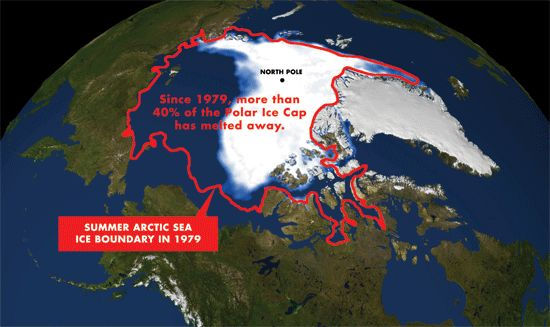
According to the a recent US Geological Survey, the Arctic holds approximately 1,670 trillion cubic feet of natural gas, 90 billion barrels of oil, and 44 billion barrels of liquid natural gas However, under existing international law, nobody owns or controls the Arctic. The only parts under sovereign control are land territories and adjoining maritime zones, of up to 200 nautical miles, belonging to Arctic coastal states of Canada, Denmark, Norway, Russia and the US. Of these, Russia has by far the longest coastline, stretching from the Barents Sea to the Bering Strait.
As things stand exploration and exploitation of the Arctic are governed by the 1982 United Nations Convention on the Law of the Sea (UNCLOS), which provides for free maritime shipping outside of a 12 nautical mile coastal boundary. Washington has still not ratified this convention and there is even less chance of it doing so now.
Every coastal state is exploring or exploiting the seabed resources within their extended 200 nm economic boundary
. Of these, Russia is by far the most advanced with its biggest capitalist corporations already reaping the rewards of large scale hyrdocarbon (oil and gas) extraction. Inevitably, competition is getting fiercer with Russia now claiming sovereignty over the Lomonosov Ridge, an underwater mountain range that stretches approximately 1,100 miles from the New Siberian Islands in Russia to Ellesmere Island in Canada. Both Canada and Denmark have issued counter claims, the latter arguing that the ridge in question is an extension of Greenland.

As if that was not enough, Washington is also having to contend with growing Chinese influence in the sphere. Besides the region’s longer term potential rewards, the Chinese bourgeoisie has already begun to use the Arctic as an additional trading route. Known as the North Sea Route (NSR), this cuts shipping time to Europe to 20 days compared to the many weeks it takes going from the South China Sea to Europe via the Suez Canal.
Developing this route is also a key element of Chinese capitalism’s overseas trade and
investment program known as the Belt and Road Initiative (BRI), which extends through Asia, Africa and Latin America, and which now includes the Arctic as part of a “Polar silk road”. Existing agreements between Russia and China include a projected expansion of Chinese transit volumes on the NSR to tens of millions of tonnes annually by 2030. This is accompanied by plans for major infrastructure and scientific research projects, although many of these are being blocked by European powers.
Accompanying such projects would be an inherent military capability under the umbrella of satellite monitoring or through submarine technology capable of targeting critical underwater infrastructure such as pipelines and fiberoptic cables. Both capabilities are already part of NATO’s resources
.
Sino-Russian military co-operation in the Arctic
In 2021 and 2022, the U.S. Coast Guard encountered Chinese and Russian warships operating jointly off the coast of the Aleutian Islands. After a 2023 Sino-Russian exercise near Alaska, U.S. news outlets called it ‘unprecedented in size’.
Moreover, for the first time, in summer of 2024 Chinese and Russian bombers were reportedly conducting joint operations in the Alaska Air Defense Identification Zone, albeit not violating US airspace. In September of the same year, coast guard vessels from both countries conducted joint operations in the same region.
The increasing militarisation of the region has been accelerated with the Trump administration’s expansion and upgrading of its Arctic fleet, a huge increase in spending on Alaska’s military – including $1.975 billion to enhance radar sites – and special Arctic training exercises for its F-35 fighter jets and B-1B Lancer Bombers in an operation aptly named Arctic Gold.
Capitalist crises inter-imperialist rivalries
The new world disorder is a natural outgrowth of the structural crisis of world capitalism which was first announced by the 1987 stock market crash and confirmed 20 years later in the 2008 financial meltdown. Such was the depth of this crisis that by 2009 the world economy had contracted for the first time since WWII. It has never fully recovered from this, so much so that the World Bank has predicted that global growth in the 2020s is on track to be the slowest of any decade since the 1960s.
It was following the stock market crash that both the UK and the USA witnessed the deindustrialisation of their economies, due in large part to the mass exodus of big capital to China and other Asian economies. However, this short term fix clearly had unanticipated long term consequences. As China became the workshop of the world, it not only began to displace its capitalist competitors as a global industrial power, but it also developed imperial ambitions of its own.
Russia was and remains by far the weakest of the original G8 economies and was in danger of being marginalised by the loss of its privileged trading relationship with Ukraine. Its subsequent occupation and annexation of Crimea was a precursor to its expansionist imperative, primarily due to the strategic military advantage it offered as host to Russia’s Black Sea fleet. Putin's unvarnished attempt to annex Ukraine, or at least the mineral rich Donbas region, hastened its rivalry with the USA, the UK, France and Germany, all of whom coveted Ukraine’s immense industrial and agricultural resources.
At the level of foreign policy, the new age of US imperialism, signaled by Trump’s “America first” campaign, could scarcely have been more obvious than in the public humiliation of Zelensky. At the same time as seeking an accommodation with Putin, Trump brazenly demanded Washington’s war dividend in the form of a $500 billion deal favouring US companies' access to rare earth production as well as other mineral deposits, including oil and gas. Even so, this pivot towards peace with Putin has also been accompanied by unprecedented levels of military expenditure. Following the attack on Venezuela, Trump called on Congress to increase the U.S. rulers’ current record-level war spending — $901 billion budgeted this year so far — by more than 50%.
The ‘coalition of the willing’ and the Board of Peace
The White House’s unilateral actions over Ukraine, Venezuela and now Greenland have been a real wake-up call for Washington’s so-called allies. Even the ‘special relationship’ between the UK and the USA is fraying at the edges. At first, the response was to succumb to Trump’s demand to increase funding for NATO. The subsequent pledge by UK and EU countries to increase their military spending to 5% of GDP by 2035 will align it to that of the Pentagon. However, this goes well beyond increasing contributions to NATO and is leaning towards some form of EU collective military capability beyond that of NATO.
This culminated recently in the Spanish Prime Minister calling for a European army in response to the Greenland crisis. Although this has been rejected by most EU member states, some form of joint military preparation and action independently of NATO is already in the pipeline as part of the ‘coalition of the willing”. The first steps towards this were announced following the January, 2024 Paris summit where the U.K. and France signed a "Declaration of Intent" to send troops to Ukraine to safeguard any future peace deal .
In the meantime, the EU as a whole is already budgeting for military expansion. An article In the December 1 issue of The Economist, entitled Europe is going on a huge military spending spree, highlighted the extent of this re-adjustment.
“European governments face a defence crunch, caught between Russian aggression and American unreliability. But they are starting to take the threat seriously. In May the European Commission launched SAFE (Security Action for Europe), a €150bn fund that gives EU members low-interest loans for defence investments. It provides money to tackle Europe’s most glaring capability gaps and to boost industrial capacity through common procurement. Sceptics doubted there would be many takers. But when the deadline passed on November 30th, 19 countries had applied and the fund was fully subscribed. Poland alone wants €43.7bn.”
This quasi-collective effort is far from developing any integrated command structure, as each of the major European powers continue to boost their own overseas strike capability. The UK has been at the forefront of this with successive landmark increases in military spending since the Tory administration of Boris Johnson. Germany too is getting in on the act. In June 2025, Berlin announced plans to spend nearly €650 billion over the next five years—more than double its current military spending—to hit NATO’s spending target of 3.5 percent of GDP on core defence requirements and transform the Bundeswehr into Europe’s strongest military.

The drumbeat of a potential global war is still quite faint, but the markers are there for all to see. This is all the more evident with the establishment of Trump’s so-called Board of Peace. Having already trashed US commitments to many of its institutions, conventions and agreements, the Board of Peace has now emerged as an embryonic alternative to the United Nations. And once again, Europe is caught in a flight or fight conundrum. As yet, none of the European countries have either accepted or rejected the invitation to join. Nor have Russia or China.
Disorder and resistance at home
As the contending powers marshal their forces, the new world disorder of capitalism and imperialism threatens broader and more sustained military conflicts. However, as events in Minneapolis also demonstrate, the parameters of this war drive will also be shaped by the war at home, where the ruling class is becoming increasingly fragmented over how to deal with a prolonged economic crisis. In Europe, the mass struggle of the French working class in defence of its pension rights has yet again underlined the basic instability of the traditional institutions of bourgeois rule. This internal fragmentation of the old order, which is already a fact of life in Spain, Greece, Ireland, Italy and Germany, is now coming to the fore in the UK as both Labour and the Tories face a potentially existential challenge from the left and right respectively.
Beginning with mass opposition to the killing fields of Gaza, the defense of democratic rights and the rights of immigrant workers, the working class in America and Europe will inevitably be drawn in ever increasing numbers into the frontline of a struggle to take power from the war makers and exploiters who threaten the world with a new conflagration.
This is not a matter of wishful thinking, but one of dire necessity as the social crisis of capitalism is accelerated by the drive towards war.


Comments